|
|
. |

|
The Carrier Isn't the Enemy: How to Prepare Your Feral or Rescue Cat for Real‑Life Emergencies and Everyday Needs
For many new adopters and rescue volunteers, the idea of "conditioning" a cat can sound like something reserved for show animals or high‑maintenance pets. In reality, it's one of the most practical, humane and essential steps you can take when welcoming a feral or rescue cat into your home. These cats often arrive with complicated histories - some have never seen the inside of a carrier, while others have been shuffled through so many that the sight of one triggers fear. Conditioning helps rewrite that story, replacing uncertainty with predictability and trust.
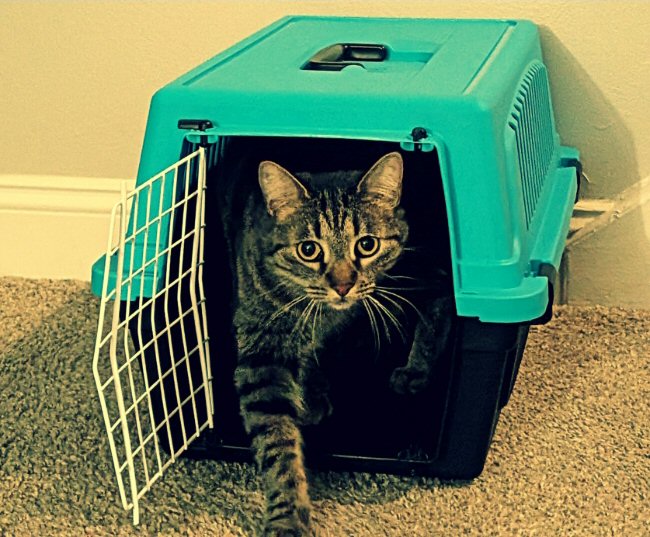
Shamrock has had a somewhat complicated journey but the cat carrier is his friend - not his foe. One of the simplest and most effective techniques is to make a standard cat carrier part of the everyday environment. Instead of pulling it out only when something stressful is about to happen, leave it open in the living room, bedroom, or wherever your cat likes to spend time. Toss treats inside casually, place a familiar blanket in there, or even feed meals near or inside the carrier. Over time, the carrier stops being a symbol of upheaval and becomes just another cozy nook in the cat's territory. This small shift can dramatically change how a rescue or feral cat responds when the moment comes to actually use it. For feral cats, this conditioning is especially important. Many have never been confined in a carrier before, so the first experience can feel overwhelming. Conversely, some rescue cats have been in too many carriers - passed from person to person, shelter to shelter, foster to foster. Both extremes create anxiety. By normalizing the carrier in a stable home environment, you're giving the cat a chance to form a new association: this is a safe space, not a trap. That emotional reframing is a gift, and it pays off every time the carrier comes into play. The practical benefits are enormous. Whether it's a routine vet visit, a sudden medical issue, a weather emergency, or even a family vacation, there will be moments when your cat must go into a carrier quickly and without drama. A conditioned cat is far less likely to panic, hide, or injure themselves (or you) in the process. In rescue work, seconds matter - especially during storms, evacuations, or urgent medical situations. A cat who willingly enters a carrier is a cat who can be protected swiftly. Ultimately, conditioning isn't about training a cat to perform a trick. It's about preparing them for the realities of life - the same way you'd childproof a home or keep a first‑aid kit stocked. For feral and rescue cats, who have already lived through instability, this kind of preparation is an act of compassion. You're giving them the tools to navigate future stress with confidence, and you're giving yourself the peace of mind that when the unexpected happens, you're both ready. That's the heart of responsible rescue care: building trust today so you can protect them tomorrow.
|
|
. |
|
|